
Monotropism is a way of being where attention goes deep, narrow, and immersive. It shapes how we learn, relate, regulate, and survive.
Stimpunks treats monotropism as a key to autistic experience—not a deficit, but a different attention ecology.
Start Here: The Questionnaire
This is one of our most-used tools:
Start Here If You Are…
🧠 Trying to understand your brain
Start with the Monotropism Questionnaire, then explore the Map of Monotropic Experiences to see how attention patterns shape real life.
🔥 Feeling burned out or overwhelmed
Visit Burnout & Sensory Safety and the Regulation & Coping Hub. Monotropic minds burn hot — they need protection, not punishment.
🏫 Designing classrooms or workplaces
Read Design Is Tested at the Edges and Learning Spaces. Monotropism changes how we think about attention, instruction, and environment.
⚖️ Questioning deficit narratives
Start with Autism Is a Neurotype, Not a Disorder and Neurodiversity as a Strength Model.
Everyday Monotropic Life
Monotropism + Burnout + Sensory Load
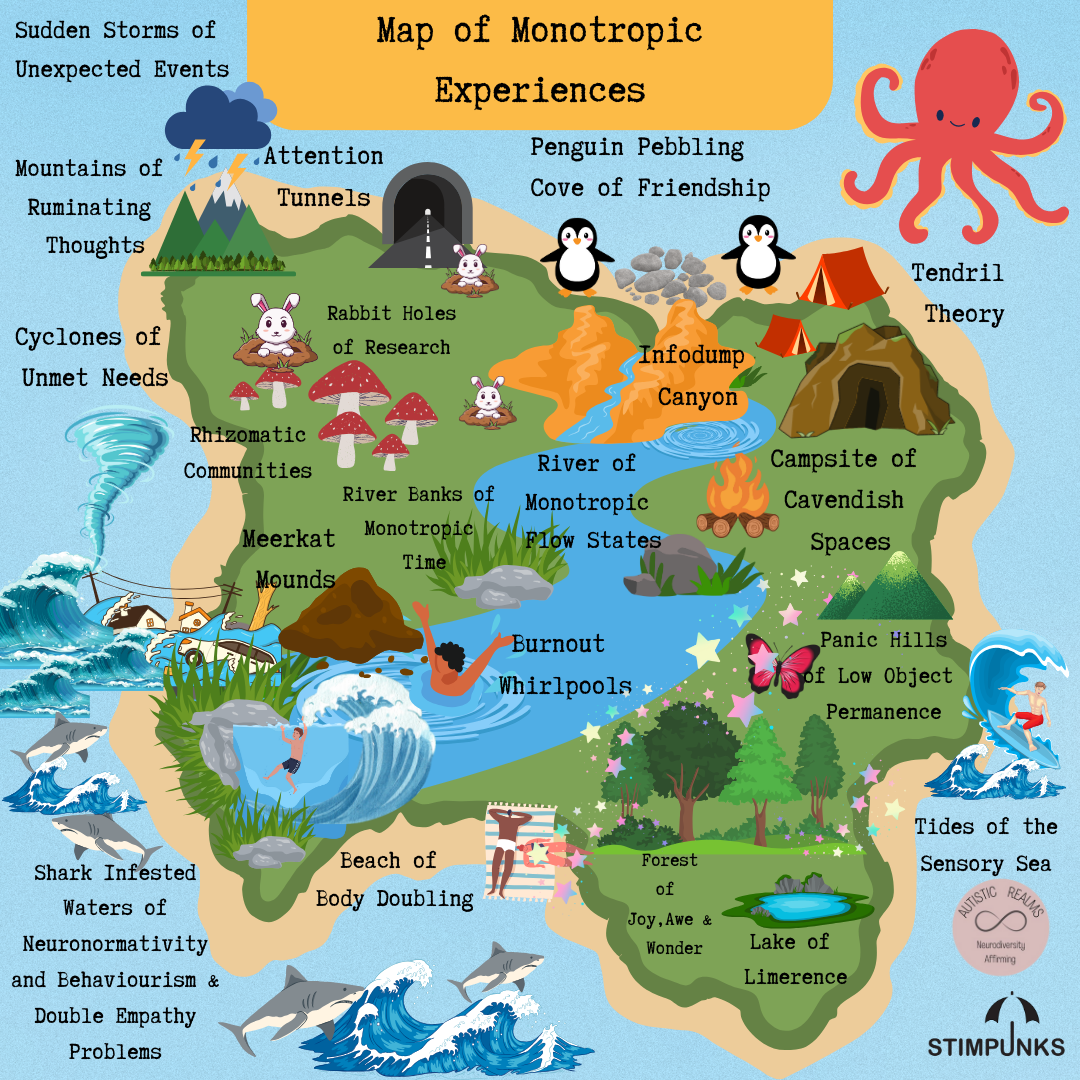
See It in Action: The Map of Monotropic Experiences

Click the image to open the map.
Monotropism isn’t just theory. It’s lived terrain.
The Map of Monotropic Experiences is a visual guide to how monotropic attention shapes real life — from flow states and joy to burnout whirlpools and neuronormative shark waters.
Use it to name patterns, reduce shame, and design environments that support focus, regulation, and connection.
Monotropism describes the pattern. The map shows the terrain.
Designing for Monotropic Minds
Attention is not a moral failing. It is a world. Design accordingly.
ADHD & Attention Worlds. Many people with ADHD experience attention as kinetic, interest-driven, and context-sensitive. See the Kinetic Cognitive Style (ADHD) Pathway for a full systems-based exploration.
Map → Burnout → Regulation (A Triangle)
These three pages explain the same reality from three angles: lived terrain, system cost, and what helps. Use the triangle to find what you need fast.
🗺 The Map
A visual, neuroaffirming guide to monotropic life — the places we move through when attention locks on, gets interrupted, or collapses.
🔥 Burnout
What happens when the map becomes all shark waters and whirlpools — when systems demand constant switching, masking, and output.
🧰 Regulation
What helps: regulation-first support, coping infrastructure, and environments that reduce friction so attention can return to flow.
Quick routes
- Lost on the map? Start with the Monotropism Questionnaire.
- In the whirlpool? Jump straight to Regulation & Coping.
- Designing for range? Read Design Is Tested at the Edges.


